




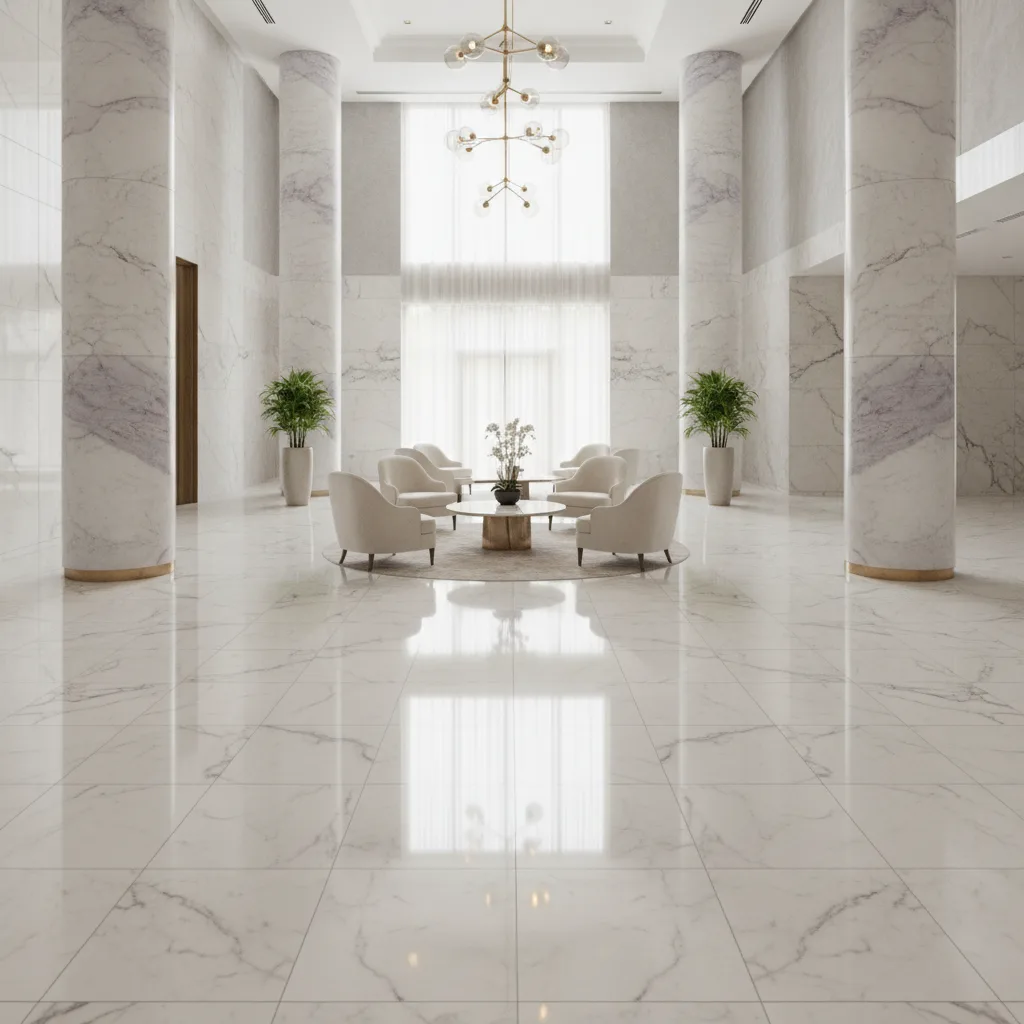
When most people think of white marble, Italy, Carrara, and Calacatta come to mind first. However, a significant portion of the white marbles you see in projects in Turkey, and even in many hotel lobbies and bathrooms abroad, come from the Aegean region, especially from Muğla. In this article, we will discuss the two Muğla marbles that receive the most inquiries in our showroom: the calm and timeless Mugla White and the Lilac White, which looks like a painting with its veins. We will discuss where the two stones come from, how they look, which spaces they suit, how to care for them, and what to consider when choosing a slab. Whether you are an architect, interior designer, contractor, or someone renovating their home, we believe you will have a clearer idea of which one is right for you by the end.
Why is Muğla the center of white marble?
Muğla is one of Turkey’s most established regions in white marble production. Block production is mainly carried out in and around the districts of Milas, Yatağan, and Kavaklıdere. The region’s relationship with marble is not new. Milas, known as *Mylasa* in ancient times, was a city famous for its white marble quarries. Today, the same veins are processed in modern quarries and exported all over the world. Another detail showing the importance of the region is this: Muğla White Marble received geographical indication registration in 2018. This means that “Muğla White” is no longer just a commercial name but is also recognized as a value belonging to these lands. There is one more point worth knowing. Since Muğla marbles come from different geological levels, many varieties can emerge from the same region, and sometimes even from the same quarry, sold under different names. It is therefore very normal to be confused when you encounter expressions such as “Muğla White”, “Milas Lilac”, “Lilac”, or “similar to Afyon White”. The explanations in this article are based on slabs in Delta Marble stocks.
What is Mugla White marble?
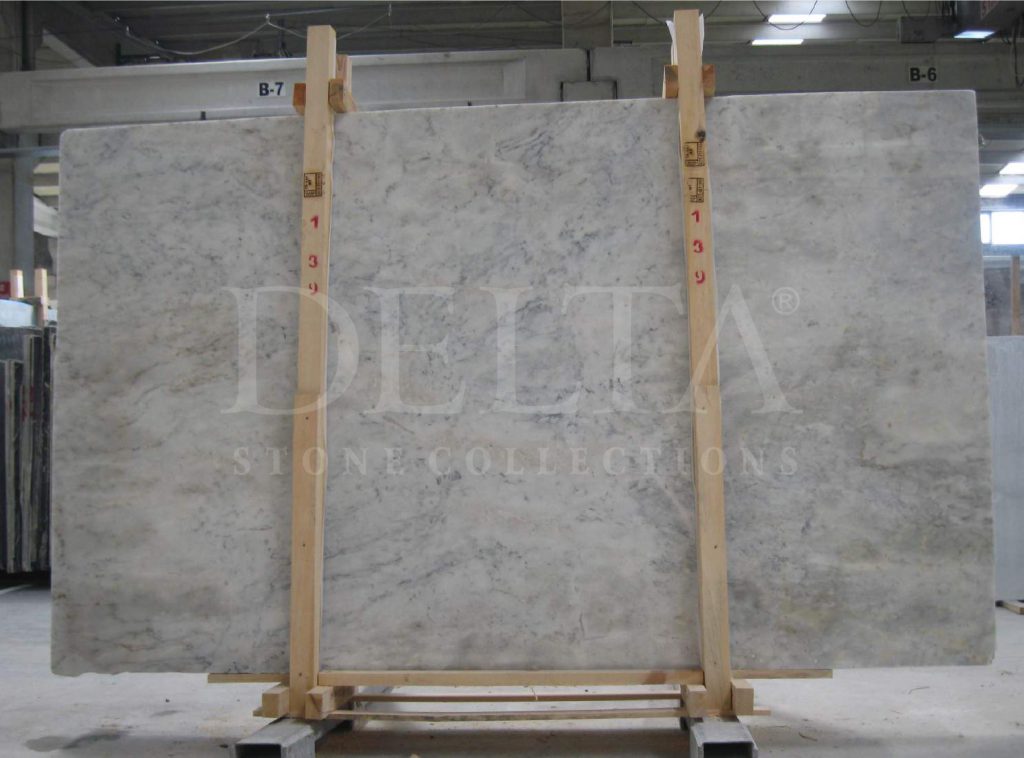
Mugla White is a marble with thin, cloudy grey veins spread across a background that varies between white and light grey. The veins are diffused like mist rather than sharp lines. This makes the stone appear calm from a distance and vibrant up close. It is one of the stones that those who love Italian Carrara marble first look at and say, “this looks similar.”
Key features of Mugla White
- Color: White to light grey, a slightly cool tone.
- Pattern: Fine, diffused, cloud or mist-like grey veins. Little variation from slab to slab.
- Effect: Fresh, bright, and simple. Makes the space appear larger, without being overwhelming.
- Product: Available in Delta Marble as DLT 5502 – Mugla White polished 2 cm slab.
- Advantage: Due to its balanced pattern, it is easy to achieve harmony between slabs in large areas. This is a significant convenience for large-scale projects.
What is Lilac White (Milas Lilac) marble?
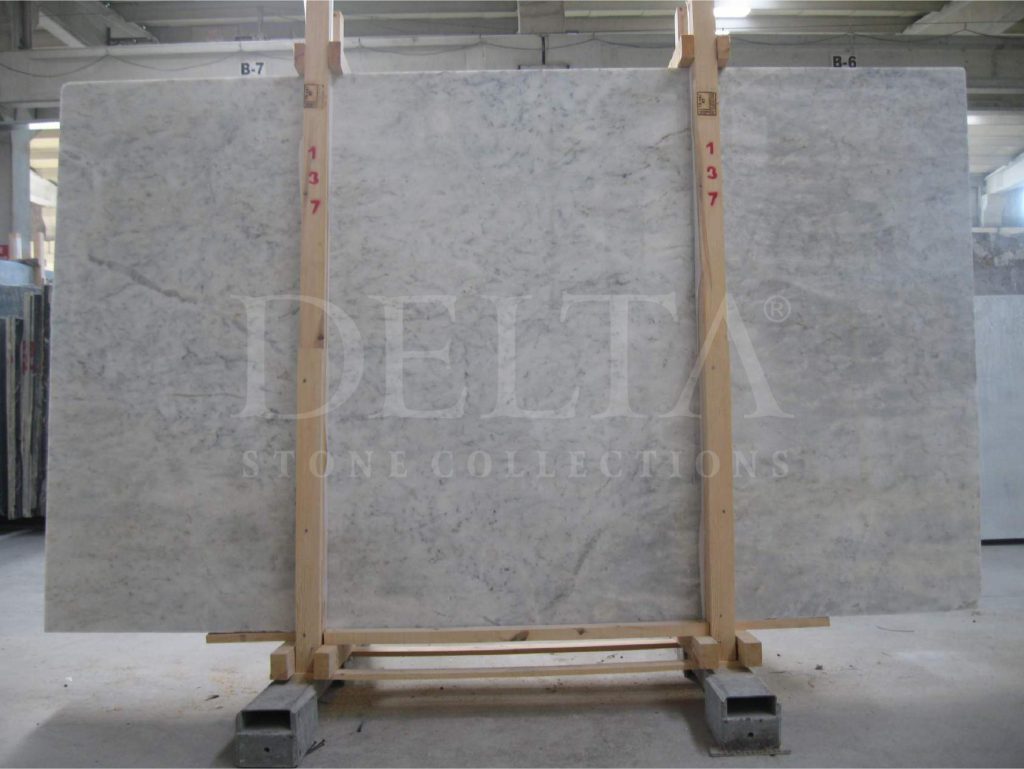
Lilac White is a memorable stone at first sight. On an almost pure white background, lilac, purple, and sometimes dark grey-to-black veins branch out like tree branches. In the industry, it is also known as *Milas Lilac*, *Lilac Milas*, *Milas Lila*, or simply *Lilac Marble*. As its name suggests, it is quarried from around Milas in Muğla.

Key features of Lilac White
- Color: Bright white background, lilac and purple-toned veins. Depending on the light, the veins sometimes appear grey-purple, sometimes almost black.
- Pattern: Dynamic, branching, “spiderweb” or “winter tree” effect. Each slab is different.
- Variety: Light, medium, and dark selections are available depending on vein density and tone. Therefore, it is important to choose the slab by seeing it.
- Product: Available in Delta Marble as DLT 5503 – Lilac White polished 2 cm slab.
- Advantage: It is a design element on its own. When used correctly, it becomes the focal point of the space.

Differences between Mugla White and Lilac White
Both are white marbles from Muğla. However, the feeling they give to a space is completely different. We have compiled the most frequently asked questions in a single table:
| Feature | Mugla White | Lilac White (Milas Lilac) |
|---|---|---|
| Origin | Muğla (around Milas, Yatağan, Kavaklıdere) | Muğla – around Milas |
| Background color | Between white and light grey | Bright, close to pure white |
| Veining | Fine, cloudy, grey | Prominent, branching, lilac-purple-dark grey |
| Pattern character | Calm, balanced, homogeneous | Dynamic, dramatic, each slab is different |
| Best suited for | Large floor areas, lobbies, corridors, general bathroom cladding | Accent wall, bathroom wall, kitchen island, vanity top |
| Harmony in large quantities | Easy | Requires slab selection and layout planning |
| Bookmatch effect | Subtle | Very strong |
| Delta Marble product code | DLT 5502 – Polished 2 cm slab | DLT 5503 – Polished 2 cm slab |
In short, if you are looking for a stone to form the background of a space, choose Mugla White; if you are looking for a stone to tell the story of the space, choose Lilac White. In many projects, we use both together: Mugla White on the floor, and Lilac White on the shower wall or behind the vanity. Since they are stones from the same region, their tones harmonize well with each other.
Which one should be used in which space?
Ideal areas for Mugla White
- Hotel lobbies, shopping malls, and office entrances: Provides a homogeneous and bright appearance in large floor areas.
- Residential floors and corridors: When combined with natural light, it makes the home appear larger than it is.
- Bathroom floor and wall cladding: For those who want a simple, clean, and timeless bathroom.
- Stair treads and skirting boards: Due to its calm pattern, transitions between pieces are not noticeable.
Ideal areas for Lilac White
- Bathroom accent wall and shower back: Transforms into a work of art with bookmatch application.
- Kitchen island and countertop: Harmonizes very well with white or dark cabinets, especially with brass and black fixtures.
- Vanity tops and marble sinks: Creates a big impact in a small area.
- Fireplace cladding, reception desk, coffee table, and table tops: For points that immediately catch the eye.
Surface options: polished, honed, tumbled, and brushed
The same stone can acquire a completely different character depending on the surface treatment. Here’s a brief guide for Mugla White and Lilac White:
- Polished: The surface that best showcases the vibrancy of the veins. Lilac White’s purple tones are most evident on this surface. Ideal for walls, countertops, and dry interior floors.
- Honed: A matte and silky surface. Shows scratches and wear marks less. Can be preferred for kitchen countertops and heavily used floors.
- Tumbled: Softened edges, a rustic look. Often used in mosaics and small-sized tiles.
- Brushed: A slightly textured and natural surface. Safer against slipping.
Our in-stock slabs are polished. For different surfaces, sizes, or products (tiles, mosaics, sinks, profiles), we produce on a project basis. For mosaic options, you can check our marble mosaic collection.
Things to consider when choosing a slab
No two natural stone slabs are ever exactly alike. This is both the beauty of marble and a situation that needs to be planned. The most important points we have observed in projects over the years are:
- Always see the slab. Especially with Lilac White, vein density varies significantly from slab to slab. Photos give an idea, but make the final decision on-site or with current slab photos.
- Purchase from the same block and the same bundle. To ensure tone and pattern continuity, reserve the entire quantity as consecutive slabs from the same block.
- Plan your bookmatch in advance. Numbered consecutive slabs provide a perfect mirror effect in bookmatch applications.
- Account for waste. It is generally necessary to add 10–15% to the total quantity for cutting and vein direction adjustment. For Lilac White, this ratio can be kept slightly higher as pattern direction is important.
- Choose thickness according to usage. A 2 cm slab is suitable for walls, floors, and many countertop applications. If a thicker appearance is desired for countertops, it can be achieved with edge profiles (bevelled, half-bullnose, laminated double thickness).
White marble care: what to do against stains and dullness?
Mugla White and Lilac White are true calcite-based marbles. Therefore, their care rules are the same as for all marbles. The good news is: with proper care, these stones will remain like new for decades.
- Apply sealer: After installation, apply a quality stone protector and reapply according to usage intensity. This process largely prevents liquids like coffee and wine from penetrating the stone.
- Keep away from acid: Lemon, vinegar, descalers, and acidic cleaners leave dull spots on polished surfaces. Wiping up spills immediately is the best protection.
- Use pH-neutral cleaner: For daily cleaning, warm water and a marble-appropriate neutral cleaner are sufficient.
- Dullness can be reversed: Dullness and fine scratches that occur over time can be removed with professional sanding and polishing. This is one of the most beloved aspects of marble.
Muğla marbles as local alternatives to Carrara and Calacatta
One of the frequent questions we receive is “What can I use instead of Italian marble?” Mugla White, with its grey cloudy texture, is a good local alternative for those seeking a Carrara look. Lilac White, with its distinct and dramatic veins, is worth considering for those looking at characterful white marbles like Calacatta or Volakas. If you are curious about Volakas, you can also read our Volakas marble project guide.
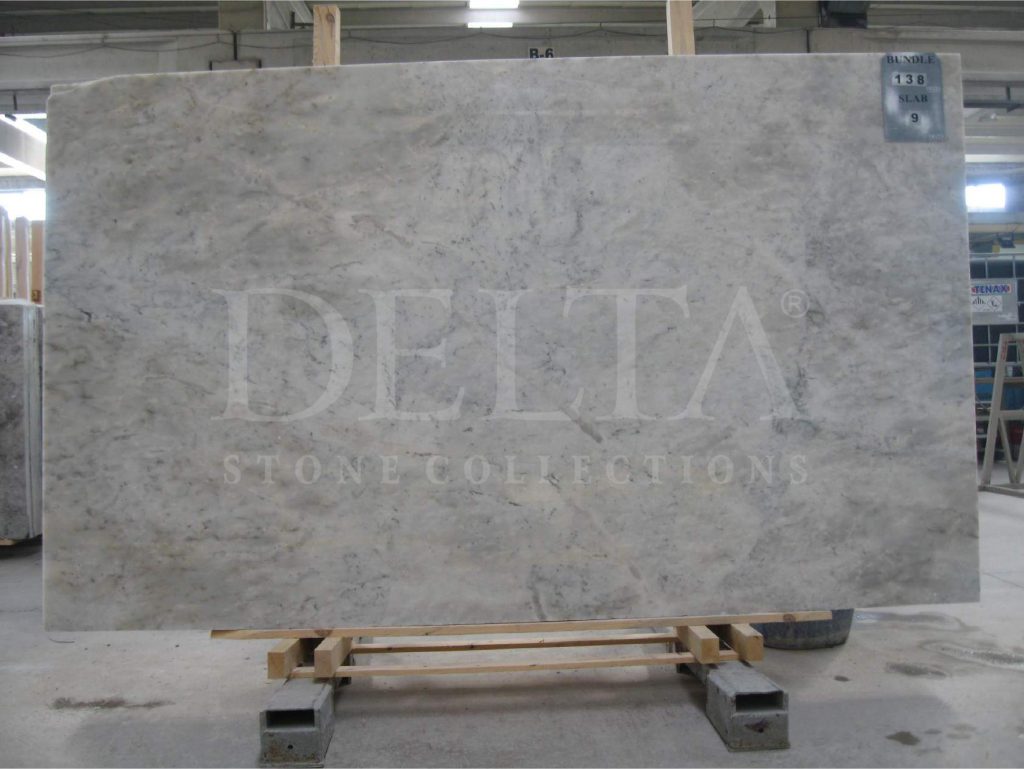
The advantages of local stone also go beyond design: shorter supply times, ease of additional orders due to proximity to the quarry and factory, and generally a more reasonable cost.
Frequently asked questions
Where is Mugla White marble quarried?
Mugla White marble is quarried from the Muğla province in the Aegean Region. Production is mainly carried out in and around the districts of Milas, Yatağan, and Kavaklıdere. Mugla White Marble received geographical indication registration in 2018.
Are Lilac White and Milas Lilac the same marble?
Yes, these are generally names used for the same stone in the market. It is also sold under the names Lilac White, Milas Lilac, Lilac Milas, and Lilac Marble. It is known for its branching lilac and purple-toned veins on a white background. There are light, medium, and dark selections depending on vein density.
Is Mugla White or Lilac White better?
Neither is better than the other; they have different uses. Mugla White is more suitable for large floor areas and spaces where a calm, bright appearance is desired. Lilac White stands out in focal points such as accent walls, kitchen islands, and bathrooms. Both can also be used together in the same project.
Can Lilac White be used for kitchen countertops?
Yes, it can be used and yields very impressive results. However, like all marbles, it can dull when it comes into contact with acid. Applying a sealer, immediately wiping up spills, and preferring a honed surface for heavy use are recommended.
Can Mugla White marble be used outdoors?
It can be used, but surface selection is important. Polished surfaces can be slippery in wet outdoor areas. For outdoor use, a honed, brushed, or tumbled surface should be preferred, and the stone should be regularly sealed.
What sizes are Mugla White and Lilac White available in at Delta Marble?
Both stones are available in our stocks as 2 cm thick polished slabs: product code DLT 5502 for Mugla White, and DLT 5503 for Lilac White. Production for tiles, mosaics, sinks, steps, and custom size requests is done on a project basis.
Would you like to see Mugla White and Lilac White slabs?
As Delta Marble, we have been producing and exporting natural stone since 1997. You can examine the slabs in person at our factory in Afyonkarahisar and our showroom and warehouse in Istanbul Dudullu, and reserve blocks and bundles for your project. Product pages: Mugla White · Lilac White · All marble slabs Request a quote and sample