




What is Travertine Stone?
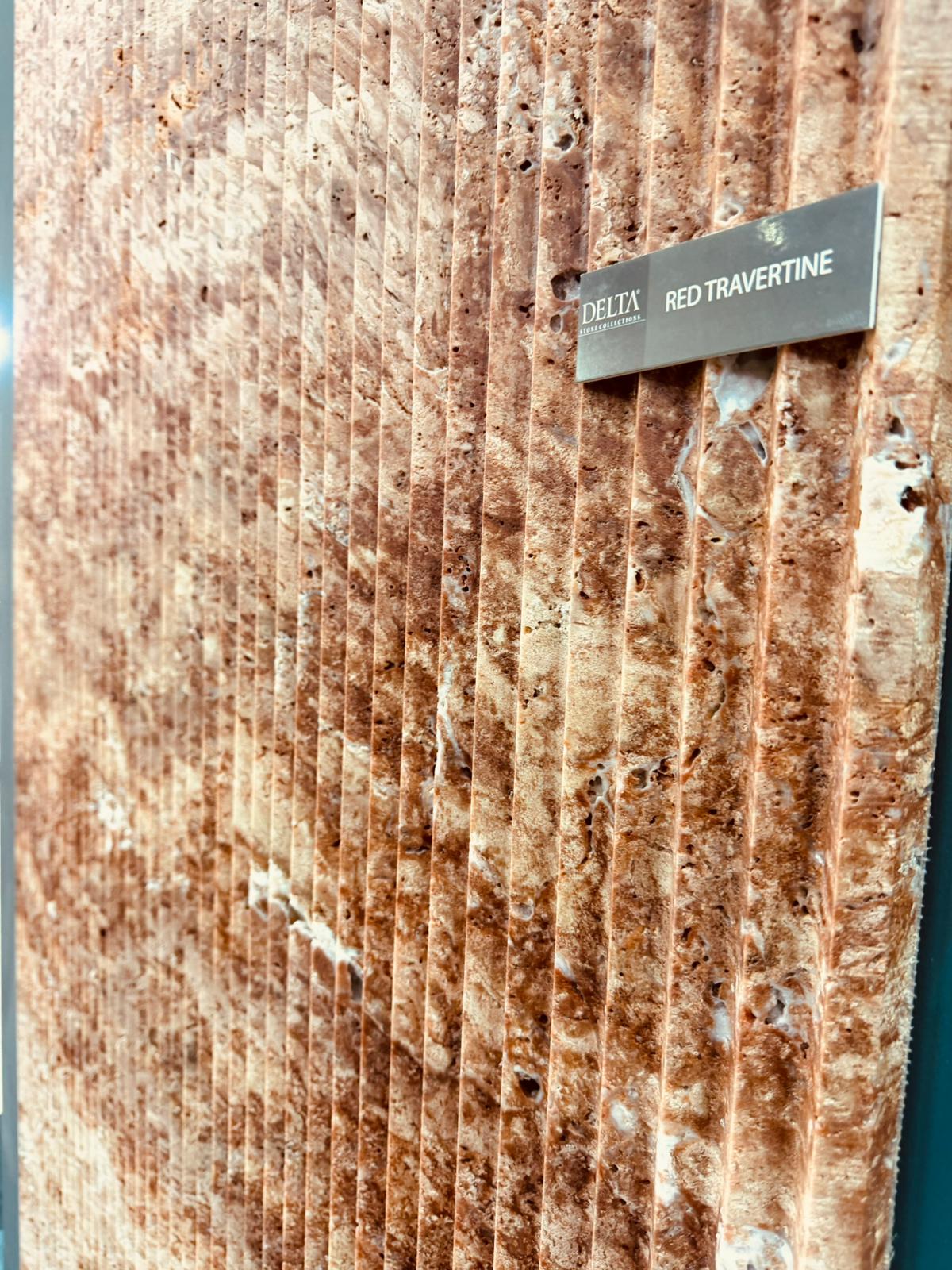
Travertine is a sedimentary natural stone formed by natural spring waters rich in calcium carbonate. The voids and pores that occur during its formation process give travertine its characteristic appearance. This natural structure ensures that each travertine slab has a unique texture. With different color options such as beige, cream, ivory, brown, and silver tones, travertine is especially preferred by architects and interior designers who want to create a warm and natural atmosphere. It can meet various design needs with different surface treatments such as polished, honed, brushed, and tumbled.
Where is Travertine Stone Used?
The usage area of travertine is quite wide. With the right product and surface selection, it can be utilized in both interior and exterior spaces. Here are the main areas where travertine stands out:
1. Floor Covering Applications
Travertine is one of the popular stones used to create a natural and balanced look on interior floors. It can be preferred in living rooms, entrances, corridors, and large living areas. Especially light beige and cream tones contribute to the perception of the space as brighter and more spacious. In travertine floor coverings, the size, thickness, surface treatment, and laying method of the stone are important. Wear and maintenance requirements should be considered in heavily used areas. For wet floors, a surface suitable for slip resistance should be chosen.

2. Wall Cladding and Decoration
Travertine offers impressive results not only on floors but also on wall surfaces. It can be used as decorative wall cladding in living room walls, entrance areas, hotel lobbies, and commercial spaces.

Thanks to its natural veins and porous texture, it adds depth to flat surfaces. Large-sized travertine slabs create a more holistic look, while smaller-sized products allow for different geometric designs.
3. Bathroom and Shower Areas
Travertine is a natural material that supports a spa atmosphere in bathrooms. It can be used on bathroom walls, floors, sink surrounds, and decorative niches. Its natural colors help create simple, warm, and relaxing spaces.

However, since travertine is a porous stone, proper application is important in areas constantly exposed to moisture, such as bathrooms. The use of appropriate surface protectors, correct grouting, and regular maintenance are necessary. Slip resistance performance on shower floors must also be evaluated.
4. Kitchen Countertops and Kitchen Decoration
Those who want to bring the natural stone look to their kitchen can use travertine for backsplash coverings, island surrounds, and decorative wall surfaces. It is also possible to use travertine as a kitchen countertop. However, acidic foods, lemon, vinegar, and similar substances can cause wear or staining on calcium carbonate-based surfaces. Therefore, when choosing a countertop, usage habits, surface protection, and maintenance expectations should be taken into consideration.

5. Poolside and Garden Landscaping
One of the most well-known uses of travertine is for pool surrounds and landscaping applications. Especially light-toned travertines with appropriate surface treatment create a natural look around pools. It can also be used for garden paths, patio floors, terraces, and outdoor seating areas. In outdoor applications, the stone’s water absorption properties, resistance to freeze-thaw conditions, surface roughness, and drainage system should be evaluated together.

6. Exterior Facade Cladding
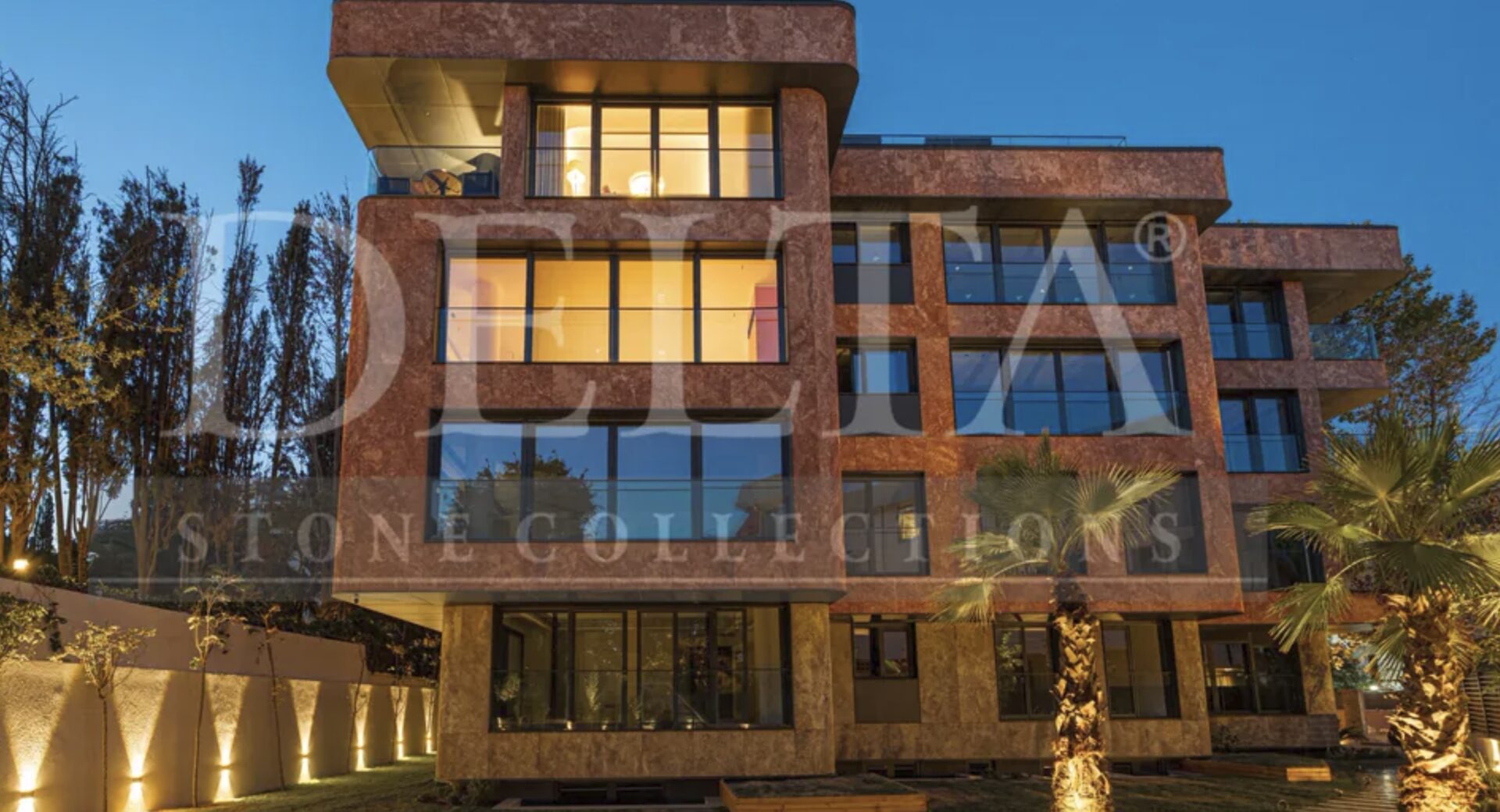
Travertine is one of the natural stones also preferred as exterior facade cladding in architectural projects. It can create a natural and strong architectural expression on the facades of villas, hotels, residences, and commercial buildings.

The thickness, dimensions, mounting system, and suitability for climatic conditions of the travertine to be used on the exterior facade should be determined by experts. Especially in mechanical facade systems, the weight of the stone and connection details should be evaluated with engineering calculations.
7. Stair and Step Applications
The use of travertine in interior and exterior stairs offers a look compatible with different architectural styles. It can be used on treads, risers, and stair landings. In stair applications, surface slip resistance, step dimensions, edge details, and mechanical strength are important. For outdoor stairs, a product suitable for weather conditions should be chosen.
8. Fireplace and Decorative Architectural Details
Travertine can be used in fireplace surrounds, TV units, decorative niches, and architectural details. Thanks to its natural texture, it adds character to living spaces.
Natural Stone Decoration Around the FireplaceIn fireplace applications, the mounting system, exposure to heat conditions, and application details recommended by the manufacturer should be considered as much as the stone itself.
In Which Areas is Travertine More Suitable for Use?
Travertine should not be expected to exhibit the same properties in every area of use. The correct product and surface treatment should be chosen according to the project’s needs.
| Area of Use | Reason for Preference | Points to Consider |
|---|---|---|
| Living room and entrance | Natural and warm appearance | Wear and maintenance |
| Bathroom | Natural spa atmosphere | Waterproofing and surface protection |
| Poolside | Natural outdoor design | Slip resistance and frost resistance |
| Exterior facade | Natural architectural appearance | Installation and engineering details |
| Stairs | Aesthetic and holistic design | Step safety and durability |
| Terrace and veranda | Interior and exterior integrity | Drainage and climate conditions |
Should Travertine be Used Indoors or Outdoors?
Travertine can be used in both interior and exterior spaces. However, product selection criteria differ for both applications. While color, texture, size, and surface appearance are more prominent indoors, resistance to weather conditions, water absorption, slip resistance, and installation details are decisive outdoors. For example, the surface properties of a polished travertine preferred for a living room floor do not necessarily have to be the same as those of travertine used around a pool. Therefore, product selection should focus not only on visual appeal but also on the technical requirements of the application area.

What to Consider When Choosing Travertine?
For a long-lasting and successful natural stone application, some basic criteria need to be evaluated during the purchasing phase:
- Color and texture: The color and vein structure suitable for the overall design of the project should be chosen.
- Surface treatment: Polished, honed, brushed, or tumbled surface options should be evaluated according to the area of use.
- Pore structure: Filled or unfilled travertine options should be determined according to the project’s needs.
- Thickness and size: Dimensions suitable for the application area and mounting system should be preferred.
- Technical specifications: Water absorption, flexural strength, abrasion, and freeze-thaw performance should be checked with the technical data of the relevant product.
- Maintenance: The cleaning and protection requirements of the natural stone should be learned in advance.
Why is Travertine Stone Preferred?
The main reasons why travertine is preferred in architectural projects are its natural appearance, different color options, and its ability to adapt to design with various surface treatments.
- It offers a unique natural texture in every slab.
- It can harmonize with classical and modern architectural designs.
- It allows for different applications in interior and exterior spaces.
- It provides design flexibility with different size and surface options.
- With proper selection and maintenance, it can be used for many years.
Conclusion: Travertine, a Natural Option in Various Architectural Projects
Travertine stone can be utilized in numerous architectural applications, from floors to walls, bathrooms to pool surrounds, exterior facades to stairs. Thanks to its natural texture, warm colors, and various surface options, it finds its place in both residential projects and hotels, villas, and commercial buildings. However, for a successful application, choosing travertine based solely on its appearance is not enough. The technical requirements of the application area, surface treatment, stone properties, and installation details must be evaluated together. Delta Marble, with its product and production experience in natural stone, helps you discover travertine options for different architectural projects. You can contact Delta Marble to get information about travertine products and natural stone solutions suitable for your project. You can review our travertine products here.
Frequently Asked Questions About Travertine Stone
In which parts of the house is travertine stone used?
Travertine can be used in different parts of the house such as the living room, entrance, bathroom, kitchen, stairs, fireplace surround, and terrace. The appropriate surface and product selection should be made according to the area of use.
Can travertine be used outdoors?
Yes. Travertine can be used for garden paths, terraces, pool surrounds, and exterior facades. However, a product suitable for climatic conditions, freeze-thaw resistance, and slip resistance should be chosen.
Is travertine used in bathrooms?
Yes. Travertine can be used on bathroom floors, walls, and sink surrounds. Due to its porous structure, appropriate surface protection, waterproofing, and regular maintenance are important.
Does travertine slip around the pool?
The slip resistance of travertine depends on the surface treatment, the texture of the stone, and the application conditions. Products with verified slip resistance suitable for wet floor use should be preferred around the pool.
Is travertine stone easy to clean?
Travertine can be easily maintained when regularly cleaned with appropriate products. Acidic and abrasive cleaning agents should be avoided, and cleaners suitable for natural stone should be used.
What is the difference between travertine and marble?
Travertine and marble are natural stones with different geological formation processes. Travertine generally has a more distinct porous structure, while marble stands out with different crystalline textures and vein patterns.