



The natural stone basin —the most characteristic element of traditional Turkish hammam culture—is no longer confined to historical sites; today, it serves as a focal point in luxury hotels, modern spa centers, and high-end residential projects. For architecture firms and interior designers, a kurna carved from natural stone lends both a timeless aesthetic and exceptional structural durability to wet areas.
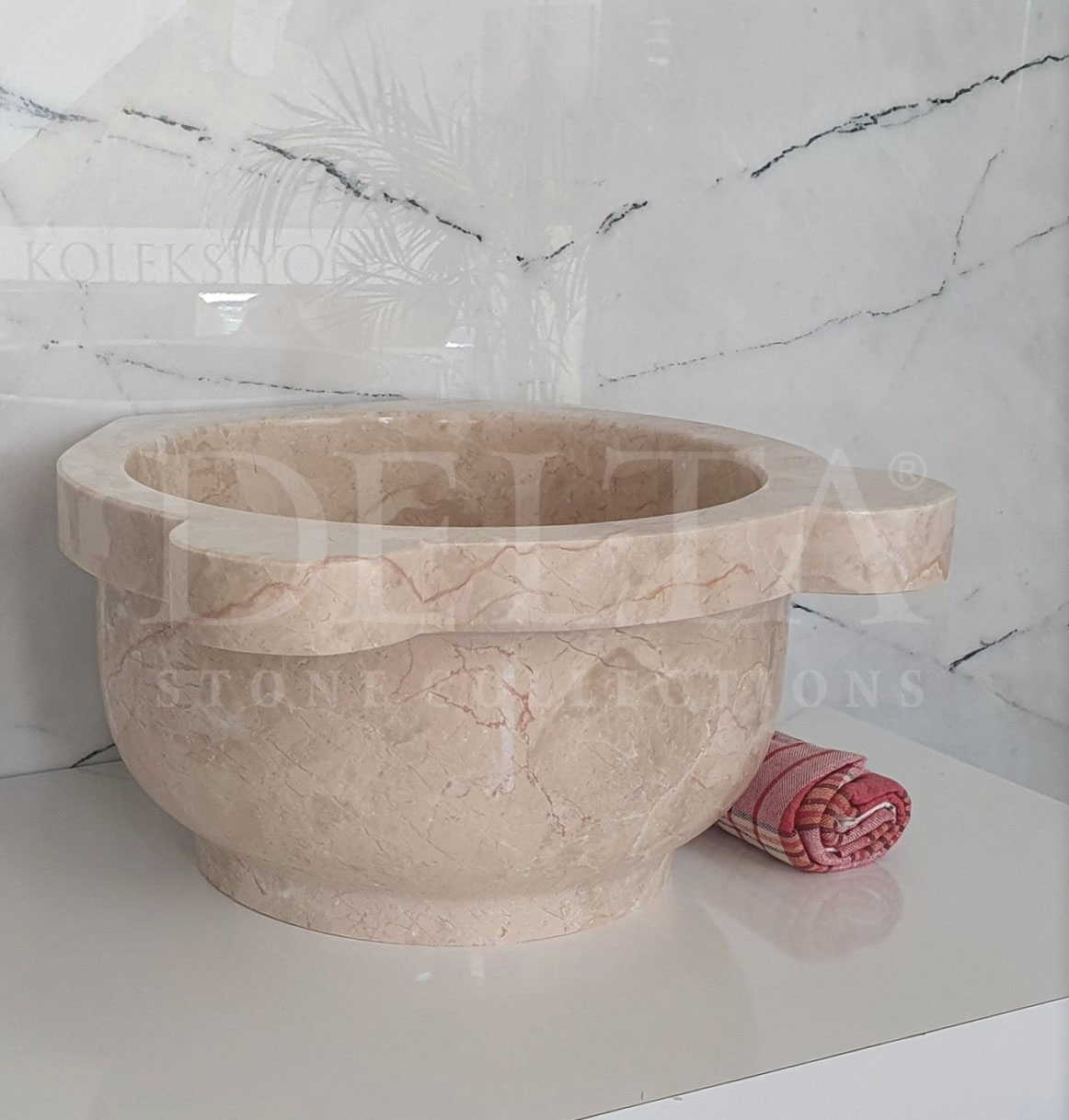
Whether for large-scale construction projects or boutique bathroom and renovation applications, selecting the right kurna requires a combination of high-quality materials, ergonomic design, and flawless plumbing planning.
Marble Kurna Design in Modern Architecture and Spa Projects
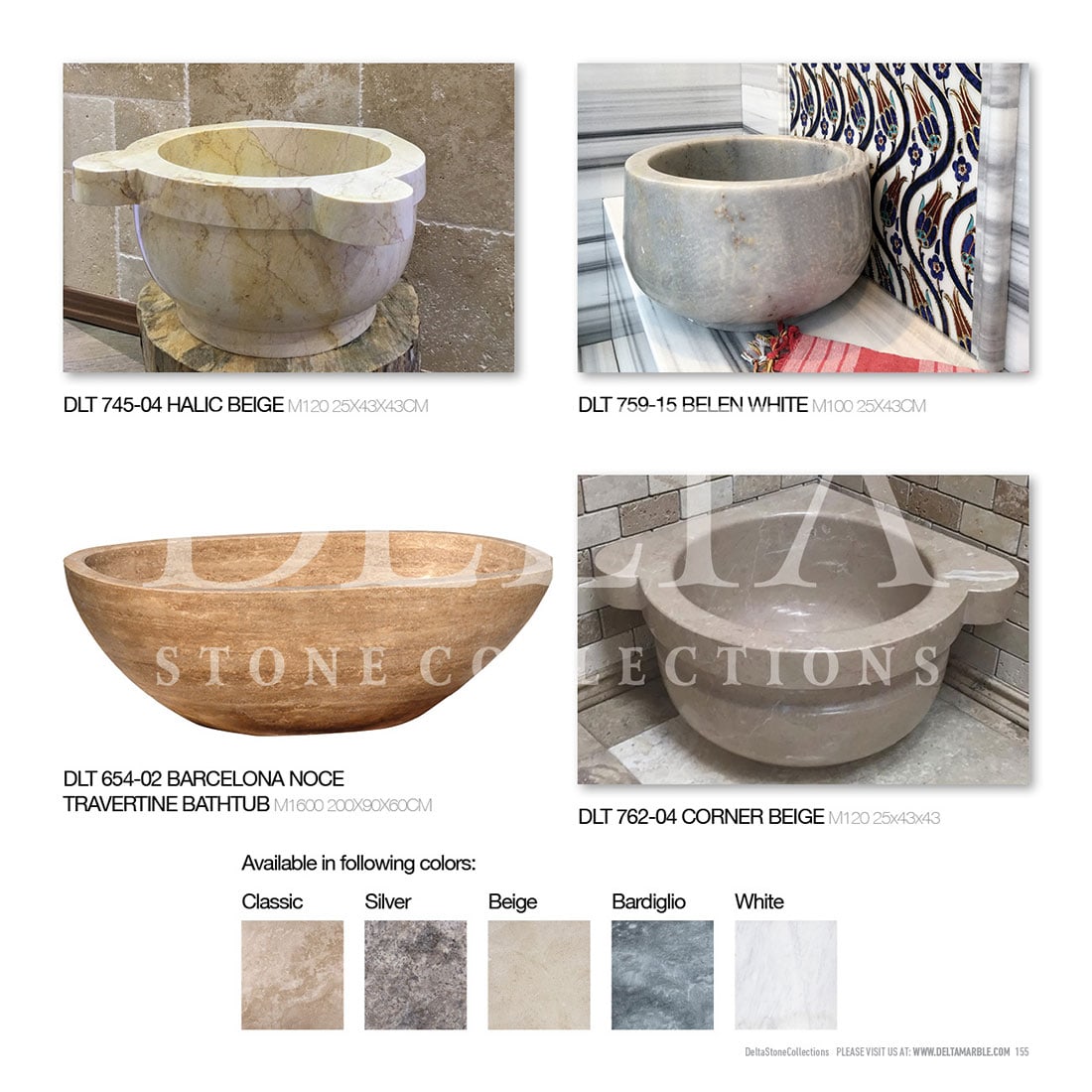
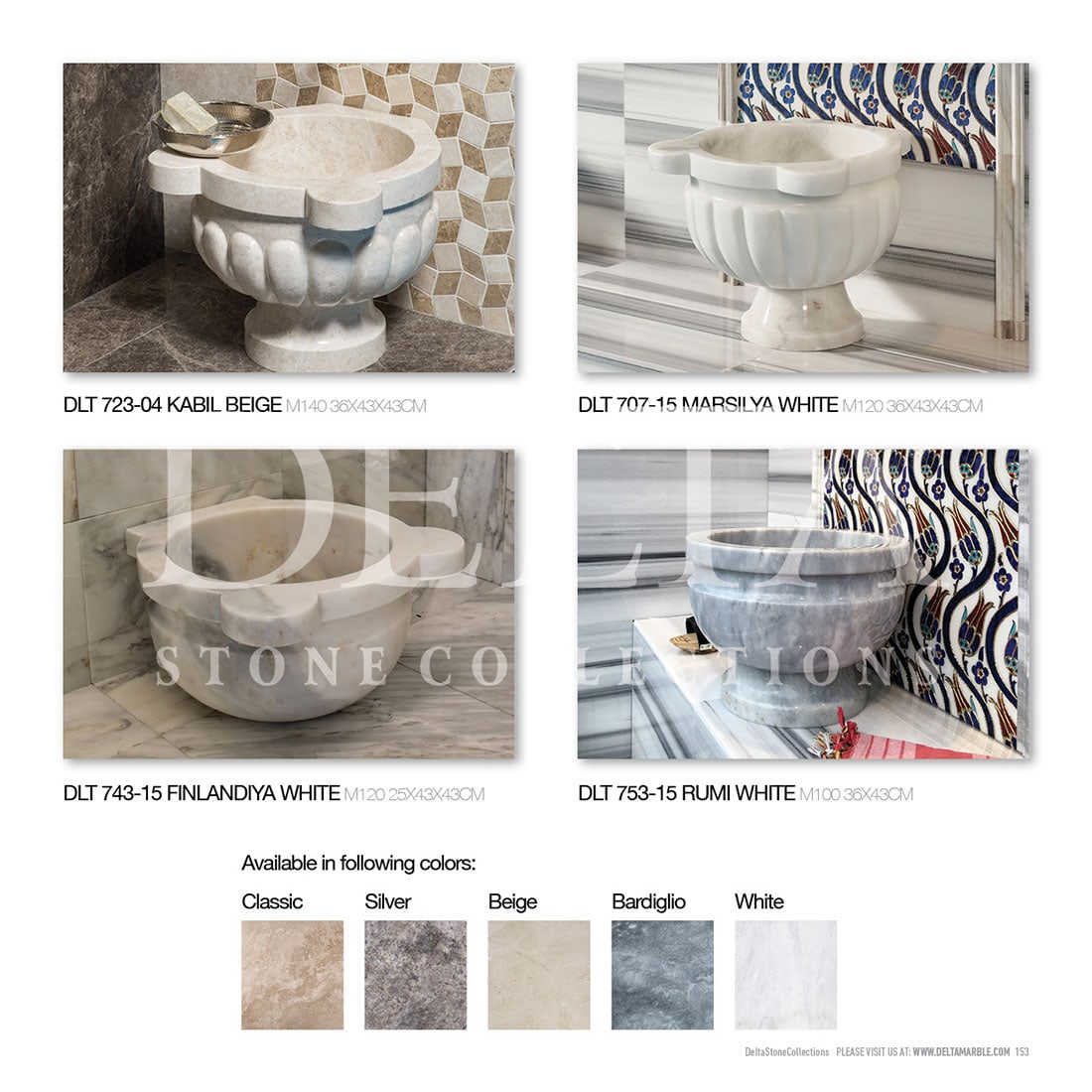
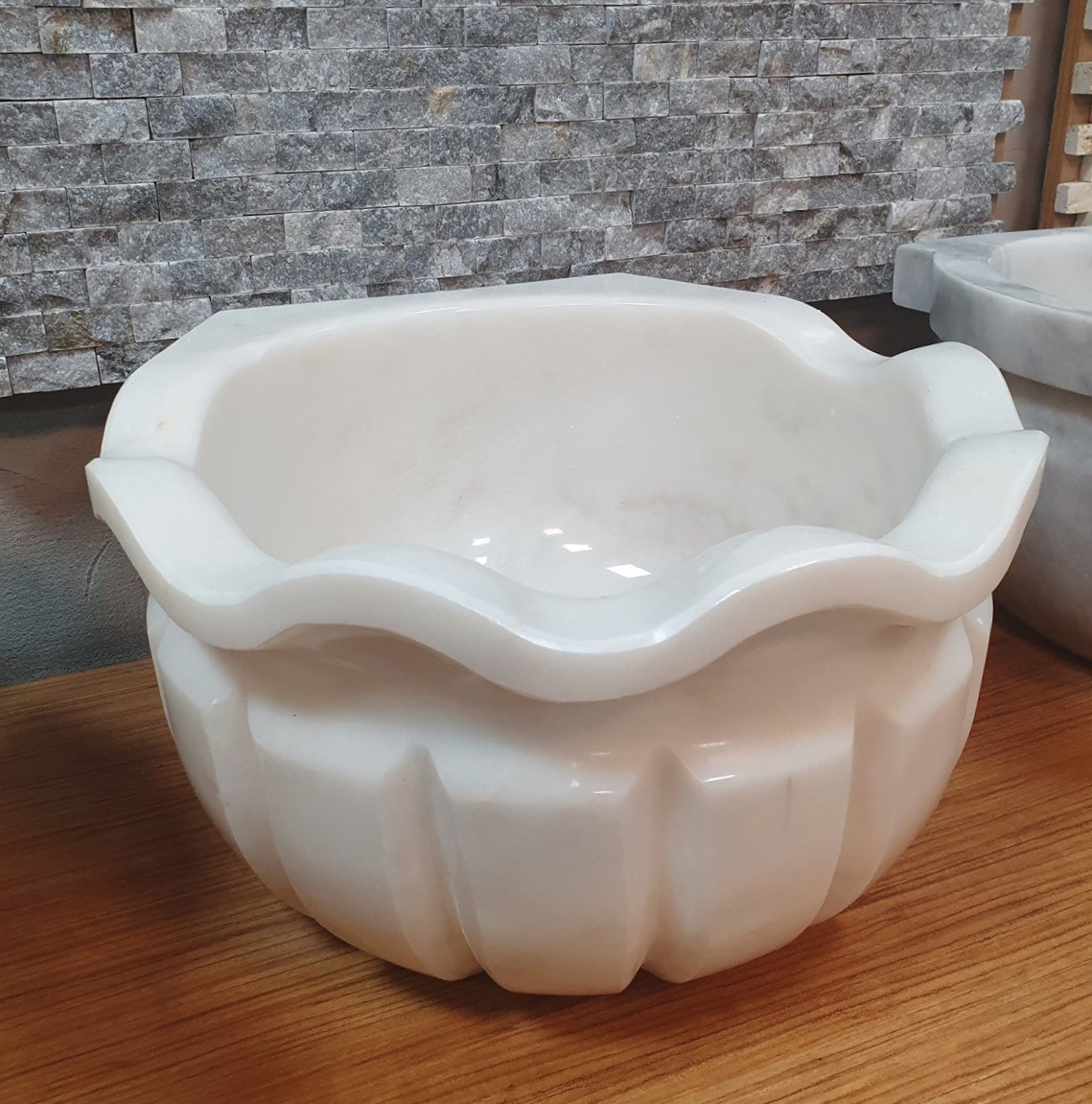
Kurnas, which are the fundamental elements for collecting water in traditional hammam architecture, are easily adapted to different spatial configurations in modern designs. They are now frequently preferred not only around the hammam navel stone but also in post-sauna relaxation areas, within large shower cabins, and in custom-designed home bathrooms. For an architect, three main design approaches stand out when determining the kurna form suitable for the project concept:
- Classic and Carved Models: These models, featuring traditional Ottoman motifs and typically produced from Marmara or Afyon White marble, are ideal for authentic hammam and boutique hotel projects.
- Minimalist and Monoblock Designs: Single-piece block kurnas with sharp lines, flat surfaces, or soft geometric forms perfectly complement contemporary spa and modern bathroom designs.
- Freestanding vs. Wall-Mounted Models: While freestanding kurnas, which present a sculptural appearance in large square-meter areas, are preferred, wall-mounted models offer space-saving solutions in more compact bathroom and shower areas.
Durability Criteria in Construction and Renovation Projects
Commercial spa centers and hotel hammams are areas exposed to high humidity, constant temperature changes, and heavy human traffic. Therefore, material selection during the construction and renovation phases directly affects long-term operating costs. The main advantages of natural marble in these challenging conditions are:
- Heat Retention Capacity: Natural stone retains hot water for a long time and contributes to the thermal balance of the environment.
- Low Water Absorption and Hygiene: High-quality Turkish marbles with a dense pore structure (especially Marmara and Afyon series), with proper surface treatment, show resistance against bacterial formation.
- Mechanical Durability: Marble kurnas carved from a single (monoblock) block using CNC or handcrafting do not have joints, thus eliminating the risk of cracking and water leakage.
Application and Plumbing Tips: Technical Guide
The flawless operation of a marble kurna is as important as its aesthetics. Plumbing and installation errors made during the construction phase can lead to costly demolition work that is difficult to rectify later. The basic technical standards that architects and application teams should pay attention to are as follows:
| Technical Parameter | Recommended Standard | Application Note |
|---|---|---|
| Installation Height | 75 – 85 cm from the floor | The top edge of the kurna should be taken as a reference. 75 cm is ideal for seated use. |
| Faucet Height | 15 – 20 cm above the kurna | The plumbing outlet must be precisely adjusted for water to flow from the center into the kurna without splashing. |
| Support System | Steel dowel or marble leg | Kurnas weighing between 40–120 kg should be secured not only with adhesive but also with mechanical anchoring. |
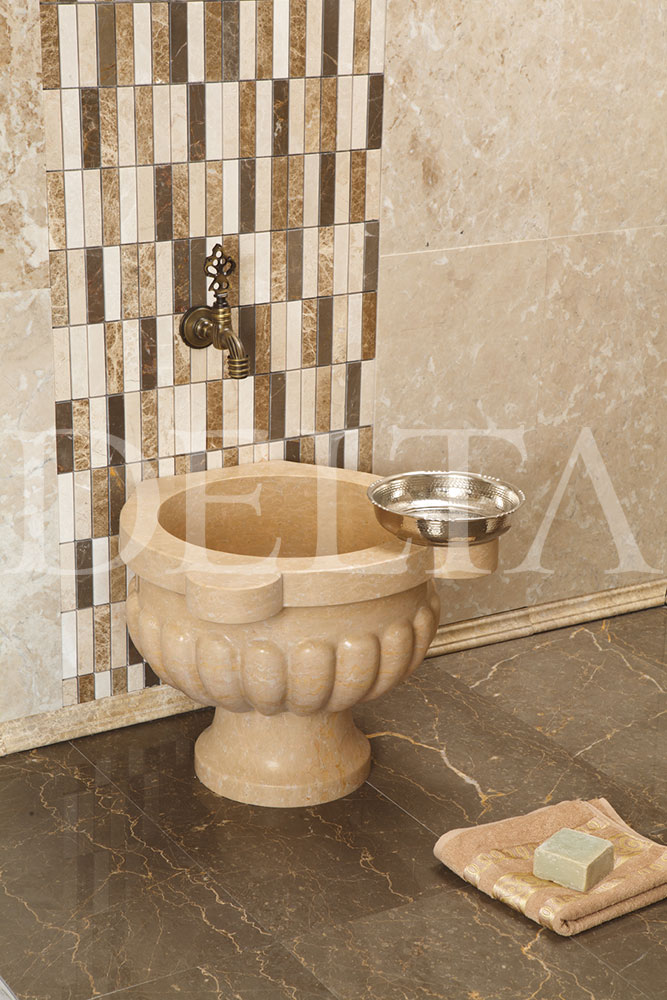
| Drainage and Discharge | Floor slope (1.5% – 2%) | Traditional kurnas do not have a drain; overflowing water is directed to the floor drain. Hidden drains can be opened in modern models. |
- Insulation and Protection: After installation is complete, a breathable, water and oil repellent natural stone protector (impregnation) must be applied to the marble surface.
- Cleaning and Maintenance: During operation, acidic cleaners (descalers, bleach) will damage the marble’s polish. Only pH-neutral natural stone cleaners should be used.



Frequently Asked Questions
What are the standard dimensions of a marble kurna?
A standard marble kurna is typically 45–55 cm wide, 40–50 cm deep, and 25–35 cm high. However, custom sizes can be produced according to the project needs of architecture firms.
Can a kurna be used in a regular home bathroom or shower area?
Yes. During bathroom renovation, a compact marble kurna can be placed in a corner of the shower area or within a special niche. The only requirements are to run hot and cold water plumbing to the kurna and to ensure the floor slope is directed towards the shower drain.
Which marble type is most suitable for hammam and spa projects?
Marmara Marble (with its striped structure and antibacterial properties) and Afyon White, which show the highest resistance to high humidity and steam, are the most preferred stones. For modern and dark-toned designs, Emperador, Pietra Grey, or black marble varieties stand out.
For standard or custom-designed marble kurna solutions, meticulously crafted from a single block to match your architectural vision in your projects, you can explore the Delta Marble collection and contact our team for technical support and project proposals.